Pack for Wet Feet, Not for Hope
A canopy handles vertical rain and almost nothing at the ankle. If your kit still assumes dry pavement, the day will be decided by soaked socks long before the map fails. This note covers what to carry so walking stays possible after shoes darken.
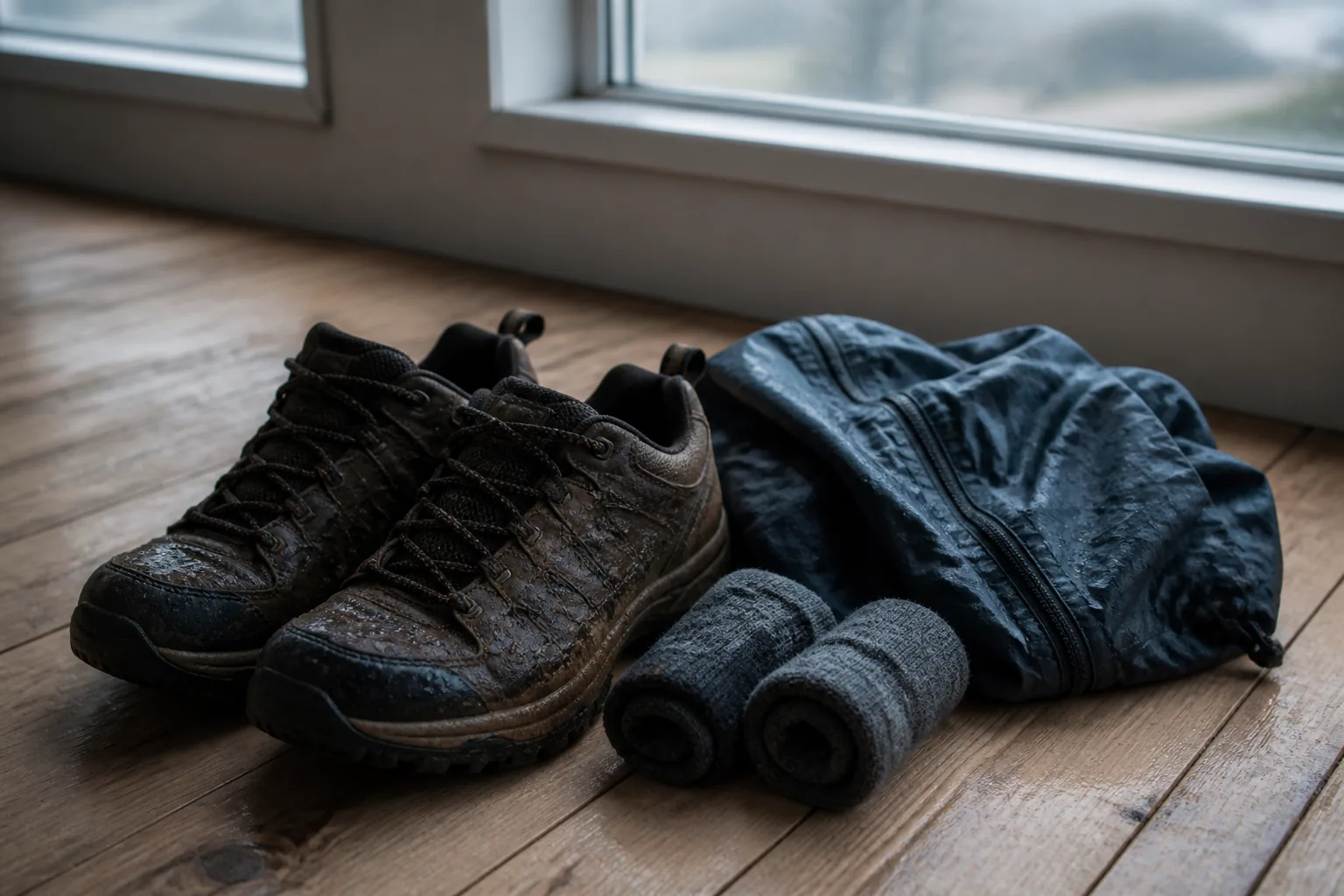
Travellers often pack for the photograph of rain: a shell, a foldable canopy, maybe a hat. They rarely pack for the part that actually ends the loop — water at the cuff, a cold heel, and shoes that turn into sponges after three blocks. I test kit against that quieter failure. The question is not whether you stay dry. The question is whether you can still walk after you are already damp.
Hope is not a layer. “I will stay under cover” is not a kit. Covered corners fill. Door mats drip. Sidewalks throw water sideways. If your plan depends on never getting wet below the knee, rewrite the plan or rewrite the bag. Usually both.
Start with the feet
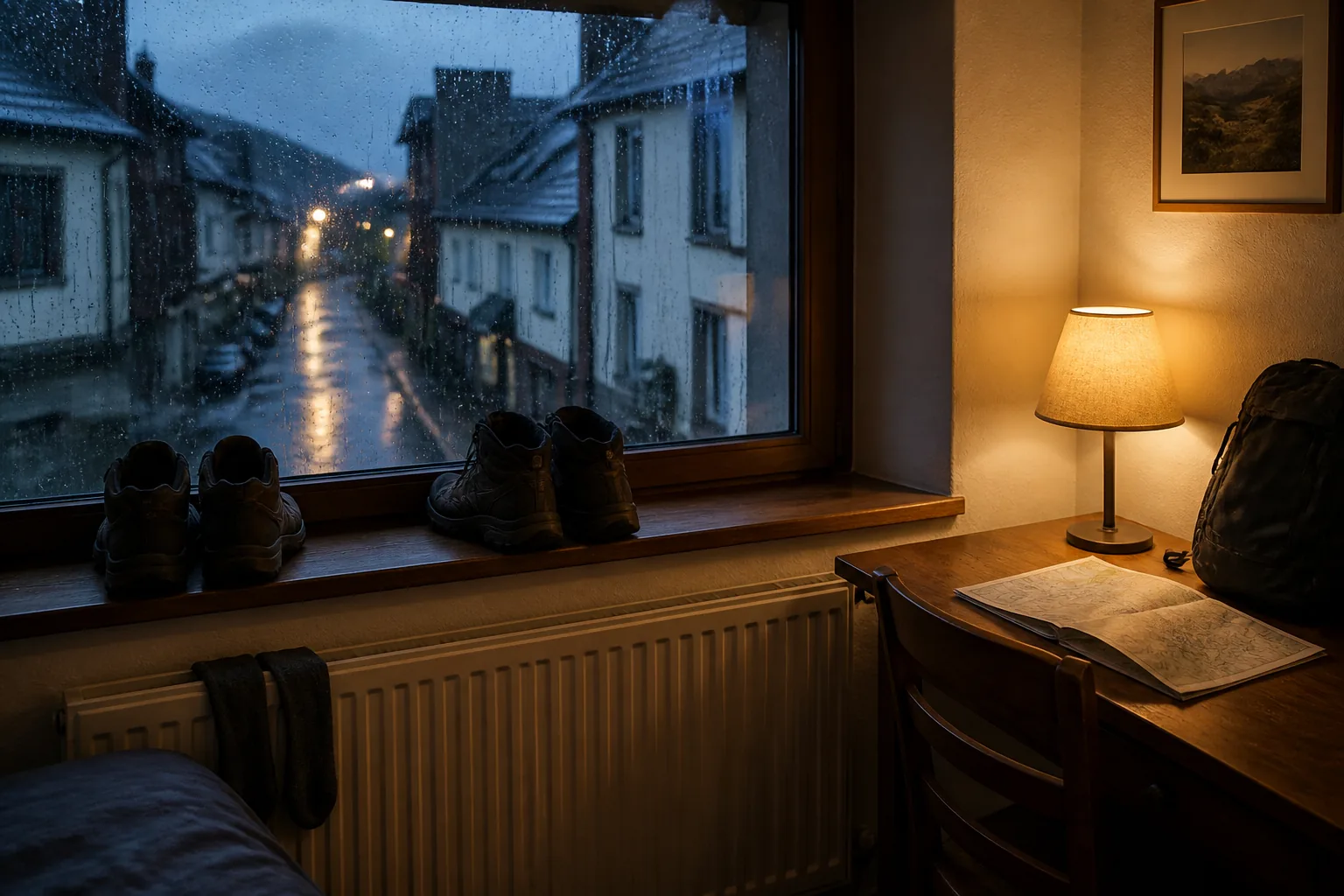
Feet fail first. Carry at least one dry pair of socks in a sealed pouch, not loose in a pocket where they also get wet. Change them at midday if the morning was long. A second dry pair for the evening is useful when the first spare has already done its job. Thin dress socks look neat and fail fast; choose pairs that still feel workable when slightly damp.
Shoes matter more than the canopy. Pick a pair you can still walk in after the leather or fabric darkens. Soft fashion soles that turn slick on wet stone belong in a different bag. Break shoes in before the trip if they are new. Blisters plus rain is a miserable combination, and no route note fixes it.
- Choose walking shoes you already trust on wet pavement.
- Pack two spare pairs of socks in sealed pouches.
- Add a small cloth or paper for drying the inside of shoes later.
- Leave decorative footwear for indoor evenings, not for the outdoor loop.
- Test the full kit on a short wet walk at home if you can.
Layers that still work when damp
Outer shells help with vertical rain and wind. They do less for cuffs that wick water upward and for shirts that cling once mist gets under the collar. Carry one mid layer that still feels usable when it is no longer bone dry. Avoid cotton next to skin if you expect hours outside. A compact shell that packs small is fine; a shell that cannot breathe will soak you from the inside during climbs between rooms.
Hands and head are secondary but still worth a line on the list. Thin gloves that fit in a pocket help on metal railings and cold door handles. A brim that keeps water off glasses matters more than a dramatic hat that blocks doorways. Keep both small enough that you will actually carry them.
Pack for the hour after the shoes darken. That is when most wet days are decided, not when the first drop hits the map.
What not to trust
Do not trust a single canopy to protect ankles. Do not trust plastic bags as the only shoe cover for a full walking day; they tear and trap water. Do not trust “I will buy socks there” if the shops you pass are closed or crowded. Do not trust a perfect forecast to cancel the spare pair. Forecasts miss. Ankles do not forgive.
- Skip kit that only works in a photo studio version of rain.
- Skip heavy extras that make you refuse short covered pauses.
- Skip perfume-heavy “weather sprays” that promise comfort they cannot deliver.
- Skip brand-new waterproof claims you have never tested on a real sidewalk.
Evening reset without drama
When you return, stuff wet shoes with paper only if you can change the paper. Hang the outer layer where air actually moves. Put tomorrow’s first spare socks where you will see them before you leave. An earlier night is often the honest end of a wet day. Questions about chill, fatigue, or feeling unwell belong with a qualified professional, not with a packing list.
Conditions change between stays. Floors, door mats, and street drainage differ. Check local advice from lodging and venues, and adjust the kit if your walking distance is longer than you planned. This list is a starting order, not a guarantee that the day will feel pleasant.
If you want help matching kit to a specific weather shape and walking distance, write to the desk. We consult. We do not sell gear from this site, and we do not run a booking platform here.
A rebuilt route and a honest bag work together. Without spare socks, even a perfect keep-move-drop list ends at the first flooded crossing. With them, you can keep walking long enough for the shorter loop to finish on time.