How to Finish Your First Soaked Travel Day
The first soaked day on a trip often ends in a cancelled loop and a lobby full of radar refreshes. A better first result is smaller on purpose: one indoor room, one named pause, and a finish that does not wait for the sky to clear.
Many travellers treat the first hard rain as a verdict: the day is lost. They cancel the outdoor stretch, then cancel the indoor one too, because waiting “just a little longer” ate the hours. Ending slightly damp and on time is a better first lesson than a highlight reel that never starts. The first soaked day is less about scenery and more about proving that a wet sequence can still close.
Do not begin with the full sunny loop you packed for. Shrink the day until it can finish. You can add distance on a later, kinder morning. The skill you need first is completion, not coverage. Travellers who insist on the original list often end up with neither the list nor the rest. Travellers who accept a three-piece day usually sleep better and walk farther on day two.
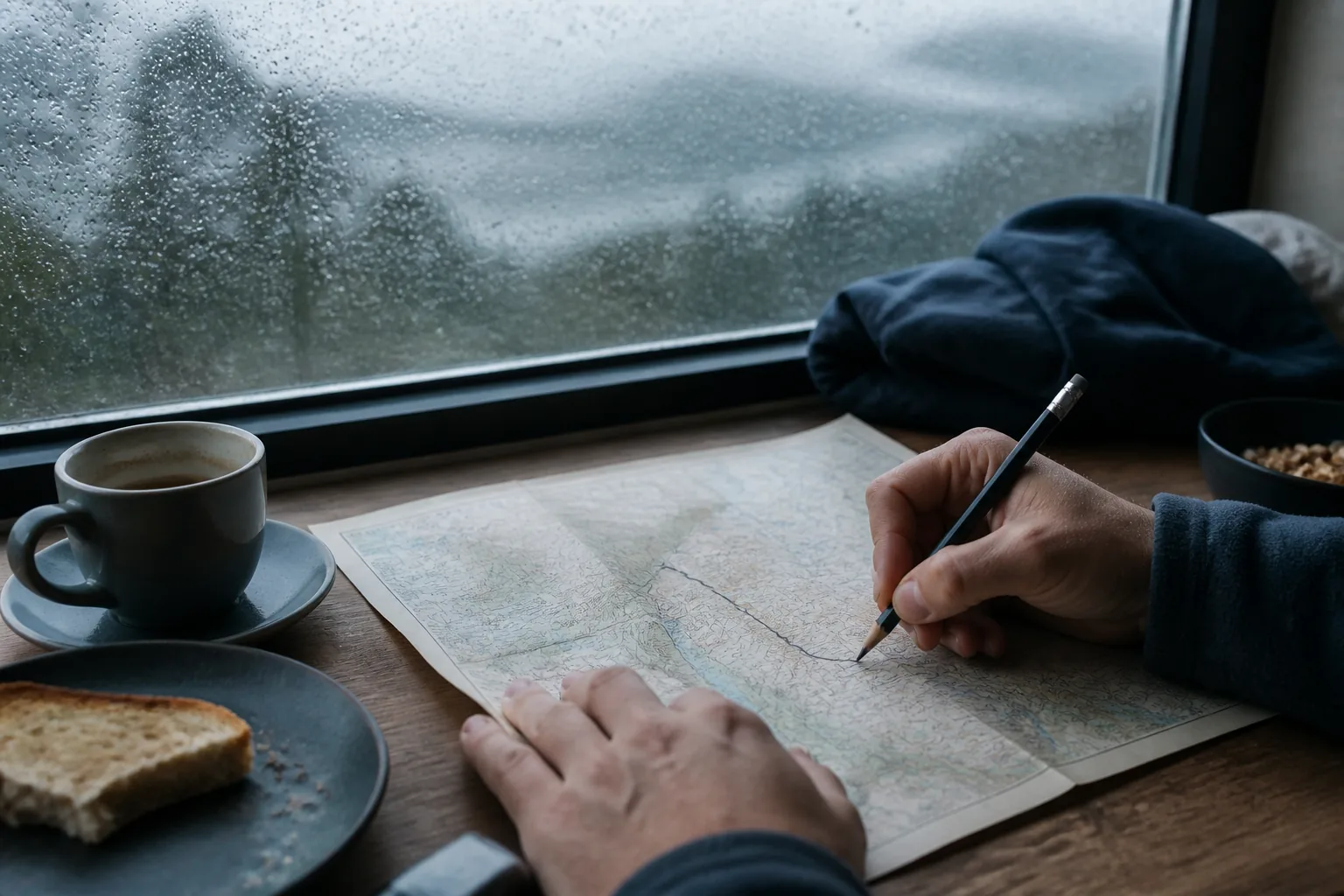
Write the smaller plan at the table, not under the first downpour. Once coats are on and the pavement is already dark, decision quality drops. A short note with one indoor stop, one pause, and one return path is enough. Leave the “maybe later” stops off the page so they cannot creep back in when the rain softens for ten minutes.
Build a three-piece sequence
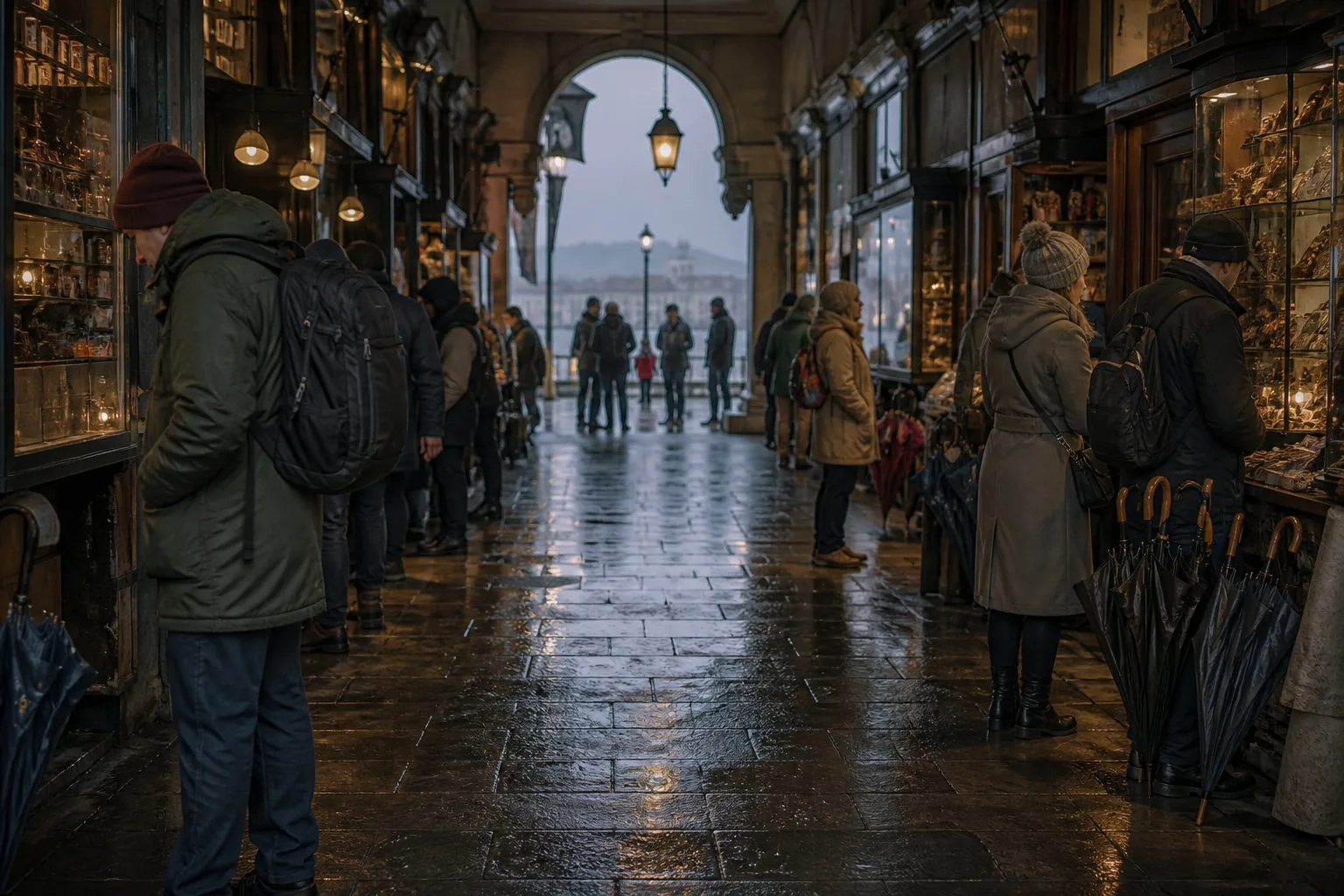
Keep the structure simple enough to remember without the map in your hand. One indoor room that opens on time. One named roof for a short reset. One walk you can reverse without drama. That is the whole first day. Everything else is optional noise. If the indoor room is closed when you arrive, do not invent three replacements in the street. Go to the named pause, then return, and rebuild tomorrow morning with dry hands.
- Choose one indoor stop and check its hours again that morning.
- Name one covered pause you can reach without a long crossing.
- Draw a short walk that returns you to lodging without extras.
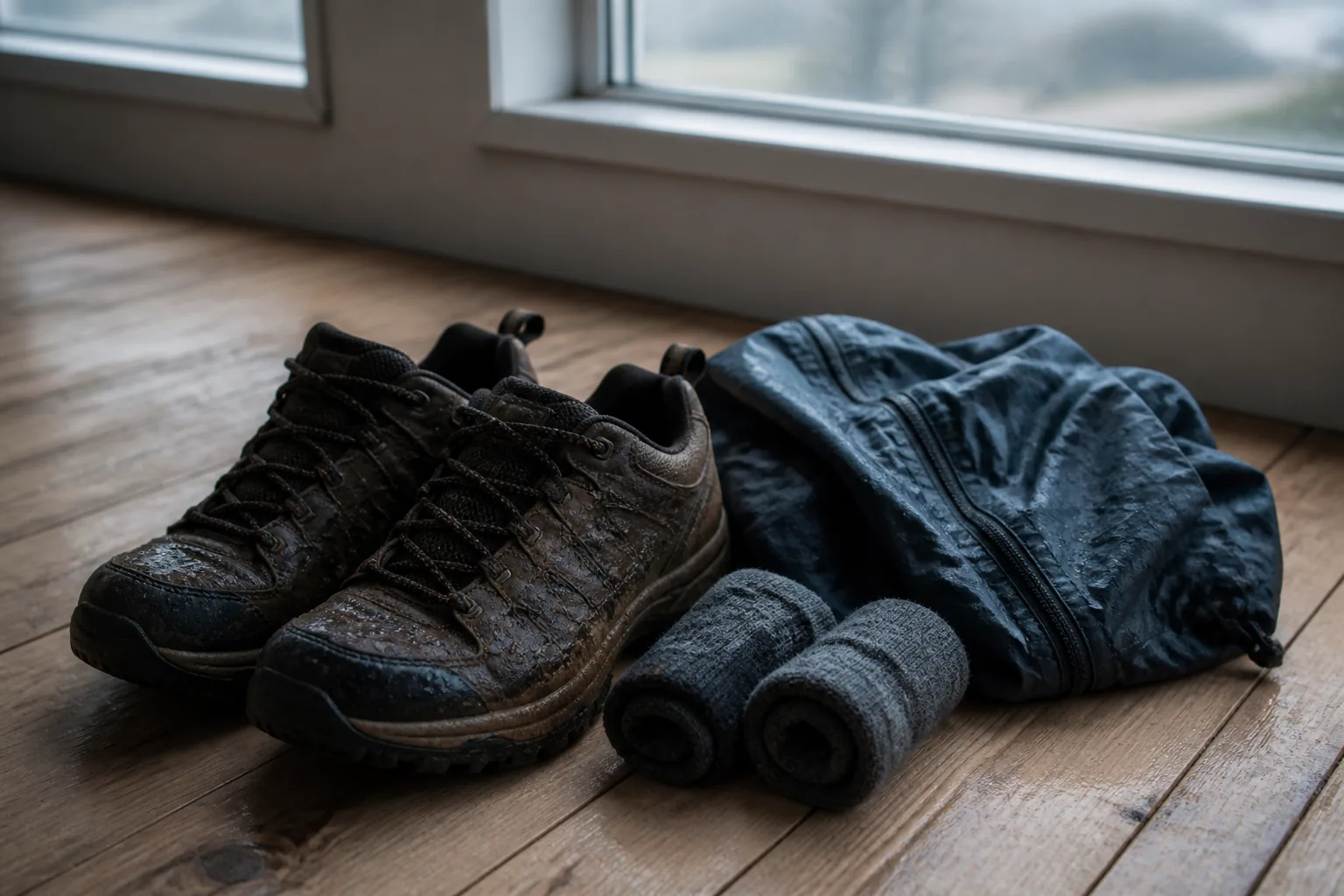
- Pack spare socks and shoes you can still walk in when dark.
- Set an earlier evening: dry shoes, hang the shell, stop arguing with the forecast.
Time the pieces generously. Wet surfaces slow steps. Ticket lines lengthen. Umbrellas snag. A sequence that looked short on a dry map needs slack. Finish early rather than race the last stretch while feet are already cold. The point of day one is a clean end, not a dramatic finish line in standing water.
A first soaked day that ends on time is a success. A cancelled day spent refreshing the radar is only practice in waiting.
What to refuse on day one
Refuse the bonus courtyard. Refuse the long viewpoint “since we are already out.” Refuse the lobby pause that never becomes a departure. Those habits teach you that rain equals loss. The smaller sequence teaches you that rain equals a different order. Saying no out loud helps if you travel with people who still hope the sky will rewrite the plan for free.
- Do not keep three outdoor stops “just in case.”
- Do not stand wet in a doorway without a next move.
- Do not skip the sock change because it feels dramatic.
- Do not treat an early night as failure of stamina.
Also refuse the habit of comparing the day to a dry holiday you once had. Comparison is how a finished wet day still feels like failure. Measure against the morning rewrite instead: Did you leave lodging? Did you use the indoor room or the named pause? Did you return without a fight with the forecast? If yes, the first soaked day did its job.
How the evening closes the lesson
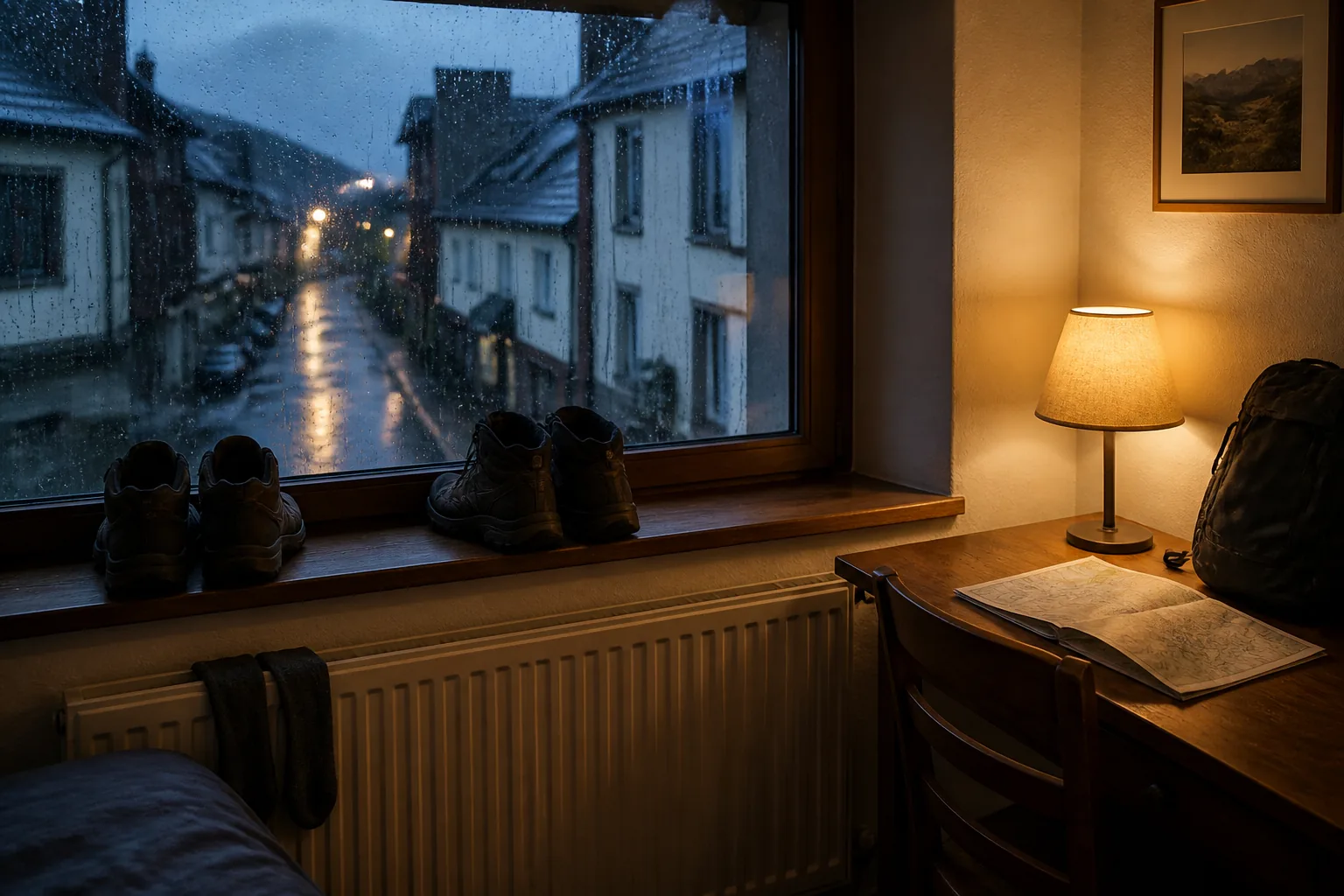
When you return, change paper in the shoes if you use any. Hang the outer layer where air moves. Put tomorrow’s spare socks where you will see them. If the rain is still loud at dusk, keep tomorrow’s first hour short and mostly covered. Ending early is often the honest close of a wet day, not a defeat. A room that smells faintly of damp fabric is still a room that hosted a completed sequence.
Take five minutes to note what actually worked: which crossing was worse than expected, which roof was too small, which indoor stop felt long enough. That note is the draft of tomorrow’s rebuild. Do not turn it into a complaint list. Turn it into shorter distances and clearer pauses.
Questions about chill, fatigue, or feeling unwell belong with a qualified professional. This sequence is about order and finish, not about promising comfort. Check venues and carriers directly before you rely on any plan. Conditions change between stays. A first soaked day that respects those limits is still a day worth counting.
After one finished soaked day, longer loops become easier to rebuild because you already know you can complete a short one. Confidence comes from closing the loop, not from waiting for a perfect forecast. If you want help shaping that first sequence to your pace, write to the desk. We consult. We do not run a booking platform from this site.