
Years of wet-day route notes
Staff have kept dated field notes on rain-changed loops since the practice opened, enough to see which morning swaps hold up from one trip to the next.
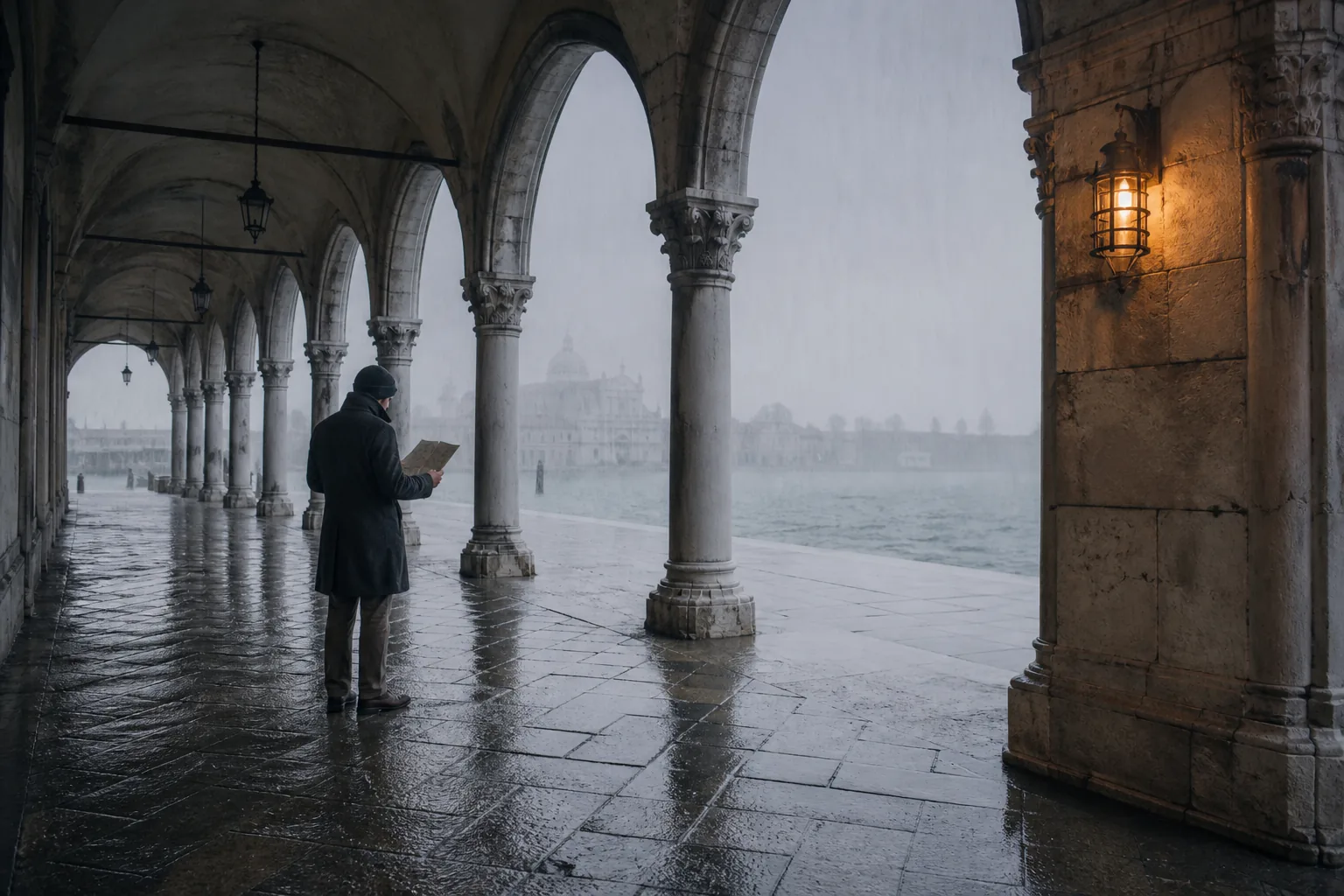
A wet day is still a travel day. The hard part is not the missing umbrella. It is the quiet order of choices that experienced travellers already make, and almost never explain.
Shoes soak faster than the forecast admits. Covered corners fill. Doors grow a puddle. Transport slips. Photographs go flat. Waiting for a brighter hour often spends the whole day in one lobby. We map a calmer sequence: what stays in the plan, what moves, where to pause under a roof, and how to keep enough energy for tomorrow if the rain does not lift.
Learn MoreHolding the original outdoor loop because it looked good on a dry morning usually costs the afternoon. Changing the order costs pride, not the journey.
People do not lose a wet day to the rain itself. They lose it to a pause that never quite ends: another look at the radar, another coffee, another promise that the next half hour will be kinder. By the time the pavement shines, the indoor rooms they meant to visit are crowded, and the outdoor stretch they refused to move is still unpleasant. Reordering is not a consolation prize. It is how the day stays a day.
A short shower, a soaked morning, a fully wet stretch from breakfast to dusk, and rain that arrives only toward evening do not ask for the same map. The shower can be waited out in a doorway if the doorway is not already a queue. A wet morning asks you to swap the long walk for the indoor rooms while floors are still quiet. A whole damp day asks for fewer crossings and an earlier return. Late rain asks you to finish the open-air piece first and keep the covered piece for the last hours. What they share is a decision made before wet clothes become the whole mood.
We do not tell you the day will still be lovely. Photographs will likely be softer. Queues at doors grow. Some views simply recede into cloud. The useful question is narrower: which two or three stops still make sense at your pace, and which ones should wait for a drier hour without turning the rest of the trip into a rescue mission.
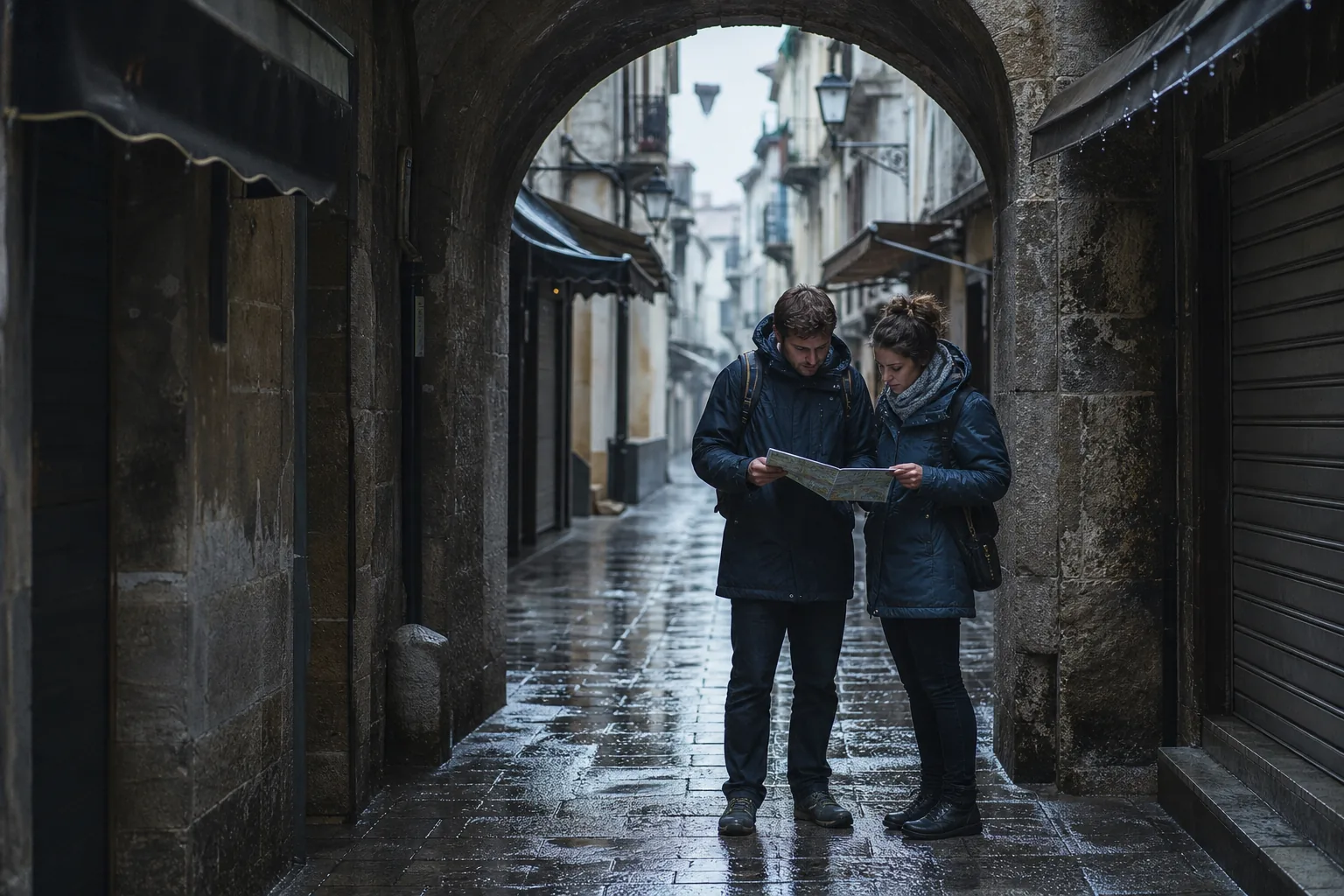
Calm wet days are not improvised under the first downpour. They follow a short order that looks obvious only after you have used it a few times.
Keep the indoor rooms that still open on time. Move the long viewpoint or the waterfront walk. Do this before coats go on. Once you are already wet, every extra block feels like a commitment you can no longer revise.
A canopy handles vertical rain and almost nothing at the ankle. Carry a dry pair of socks, a layer that still works when damp, and shoes you can walk in after they darken. “I will stay under cover” is not a kit.
A station hall, a gallery foyer, a market shed, a hotel arcade: pick them while you can still read a map with dry hands. Stay long enough to reset, not long enough to claim the bench as a waiting room.
Wet days punish distance more than they punish a shorter list. Cluster stops that share a block. The extra courtyard “since we are already out” is how a compact loop becomes a slog.
Shake water before the mat, not on it. Do not block the inward swing. The puddle at the threshold is not decoration; it is how the next person enters. Move through, then sort bags inside and to the side.
These figures come from consulting work and trip briefings, not from a promise of perfect weather. They describe how often we see the same wet-day patterns repeat.
Staff have kept dated field notes on rain-changed loops since the practice opened, enough to see which morning swaps hold up from one trip to the next.
Each briefing records what stayed, what moved, and where people actually paused. One hundred eighty is a working sample, not a marketing round number.
Arcades, ticket halls, museum foyers, market sheds, ferry waiting rooms, and similar roofs. We note how long a pause stays civil before it becomes a crowd.
Short shower, wet morning, full damp day, and rain only toward evening. We compare those four before we talk about shoes, roofs, or an earlier night.
After the morning rewrite, the day still has a few places where small manners and a shorter ambition matter more than a new map.
Use a roof to dry hands, reread the next hour, and let a hard shower pass. Fifteen quiet minutes is usually enough. Occupying a whole bench with bags while other wet people have nowhere to stand is the usual rudeness. If a space is already tight, keep walking to the next named roof rather than adding bodies to the first one.
Wet clothes spread. Leave a gap so the door can open. Do not wring sleeves over the mat. If the line is slow, that is a reason to have already chosen an indoor first stop, not a reason to argue with the weather in place. A compact loop means you are less often stuck on a threshold with nowhere to put the drip.
Stuff wet shoes with paper only if the paper can be changed. Hang the outer layer where air actually moves. Set tomorrow’s first hour to something short and mostly covered if the rain is still loud at dusk. An earlier night is often the honest end of a wet day, not a failure of stamina. Questions about chill, fatigue, or feeling unwell belong with a qualified professional, not with a travel note.
Do not begin with the full outdoor loop you packed for sun. Choose one indoor room, one named pause, and a walk you can reverse without drama. Ending on time, slightly damp, is a better first result than a cancelled day spent refreshing a forecast. You can add distance on a later, kinder morning.
Three editors keep the notes, the kit lists, and the pause maps. Qualifications below are professional training in travel editing and visitor flow, not medical credentials.

Senior itinerary editor
Certificate in Route Sequencing, Independent Travel Editors Guild. Rain-Day Field Notes program, Coastal Walks Observatory.
Elena rebuilds morning loops: which viewpoint can wait, which indoor room should move earlier, and how to say that without turning the day into an argument.
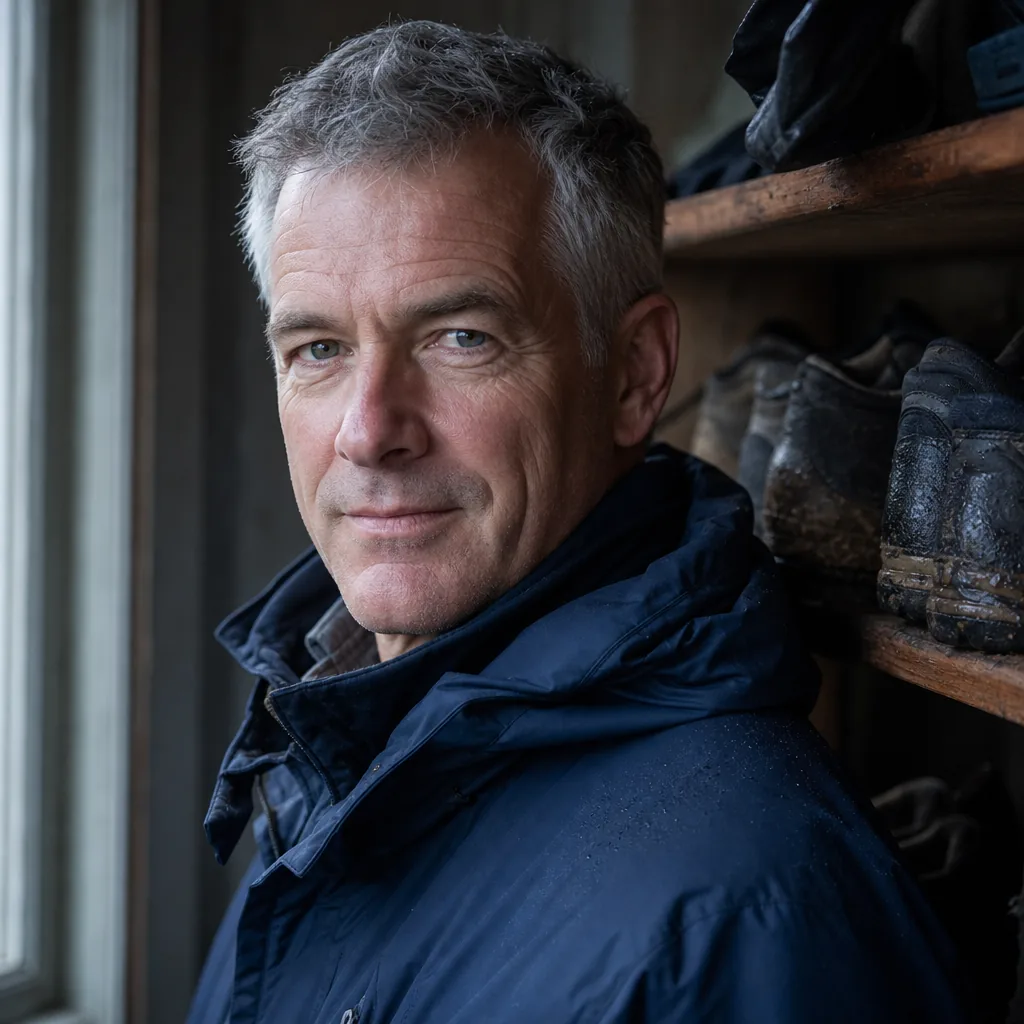
Kit and footwear advisor
Pack Systems Workshop, Outdoor Gear Educators Guild. Wet-Weather Walking Briefing, Trail Maintenance Alliance.
Marcus tests what actually survives a wet street: spare socks, a layer that still works damp, and shoes you can still walk in after they darken.
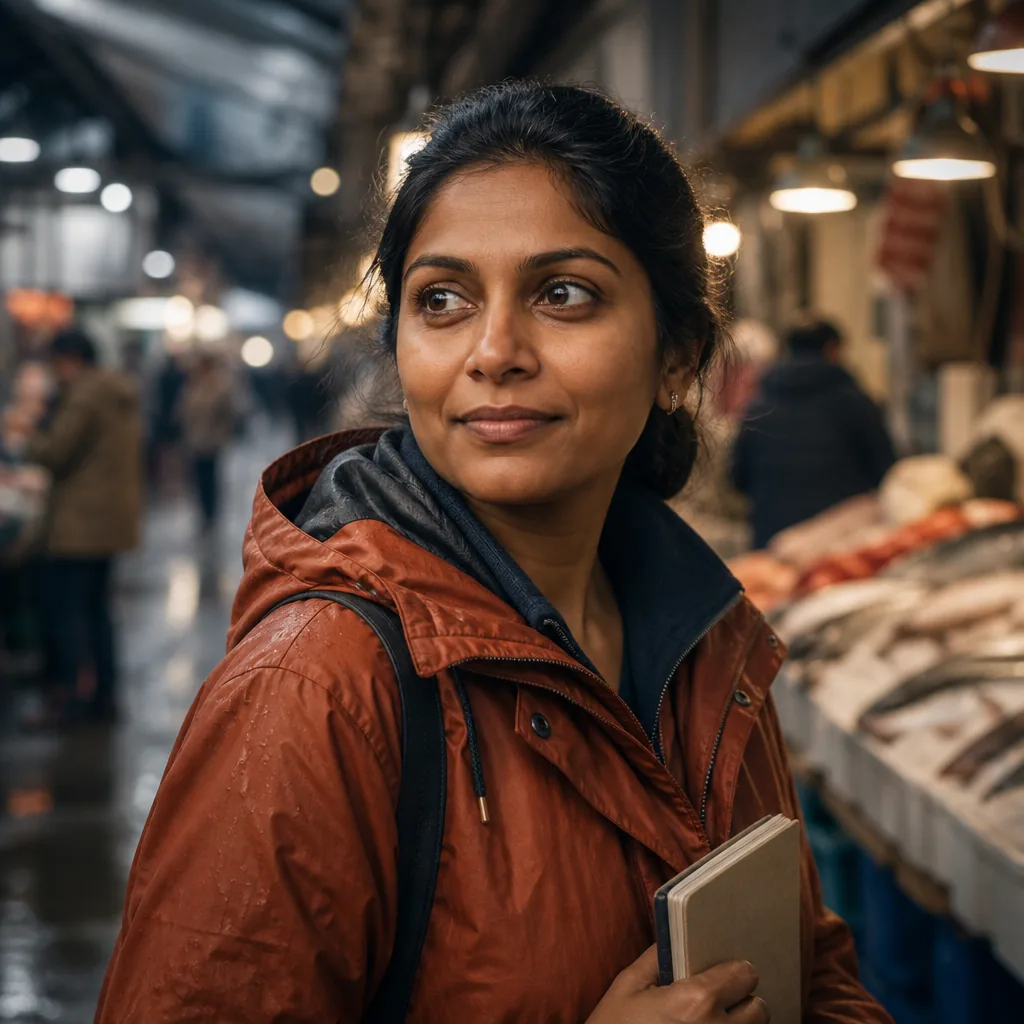
Covered-pause researcher
Visitor Flow Seminar, Heritage Interpretation Association. Indoor Wayfinding Certificate, City Movement Lab.
Priya maps roofs that can take a short pause without blocking other people, and the small door manners that keep a wet entrance from turning into a jam.
These are individual accounts of consultations. They are not typical results, and they are not a promise that your weather, crowds, or energy will match theirs.
If rain is already in the forecast, or if a past trip taught you to freeze until the sky changed, we can walk through a calmer order with you: morning swaps, kit, named roofs, and a finish that does not depend on a lucky break in the clouds.
Request a Consultationbraunitoid treats a rainy stretch as its own part of the trip. We write down the unglamorous order — table, kit, roof, shorter walk, doorway, evening — so you are not left inventing it under the first shower. We consult. We do not run a booking desk or a live weather service from this site.
braunitoid provides knowledge about wet-day travel choices and offers consultations on this part of a trip. The pages are here so you can become familiar with our approach before you write to us. They are not a substitute for local rules, opening hours, transport notices, or advice from qualified professionals about health, cold, or exhaustion.
Weather, crowds, floor conditions, and entry requirements change from one stay to the next. A sequence that worked on a previous visit can fail on the following one. Check the current details directly with venues, carriers, and lodging before you rely on any note you read here.