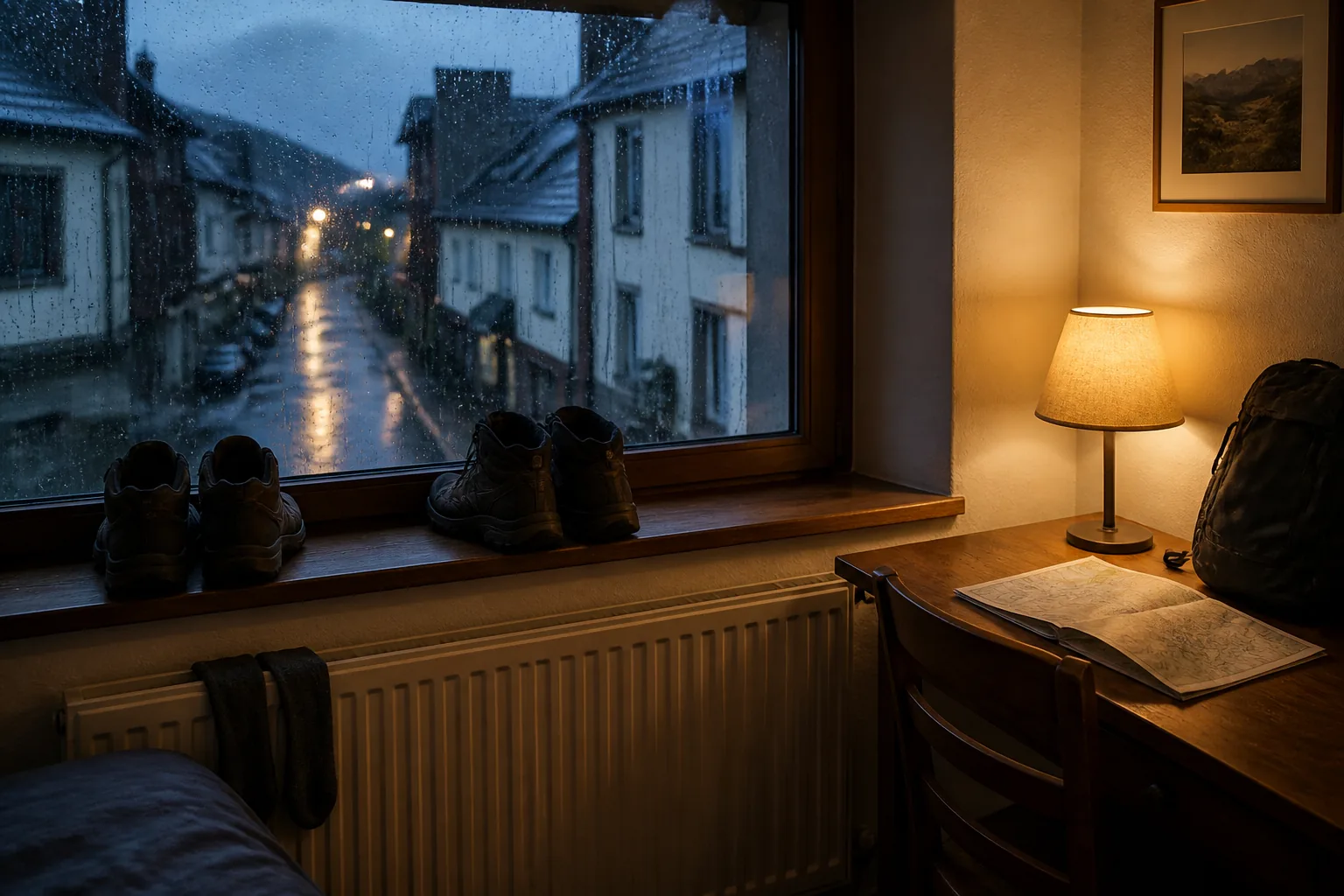
Covered Pauses That Leave Room for Others
Rain concentrates people under fewer roofs. A pause that feels private to you can close the only dry strip for someone else. This note is about naming roofs early, staying briefly, and keeping doorways usable.
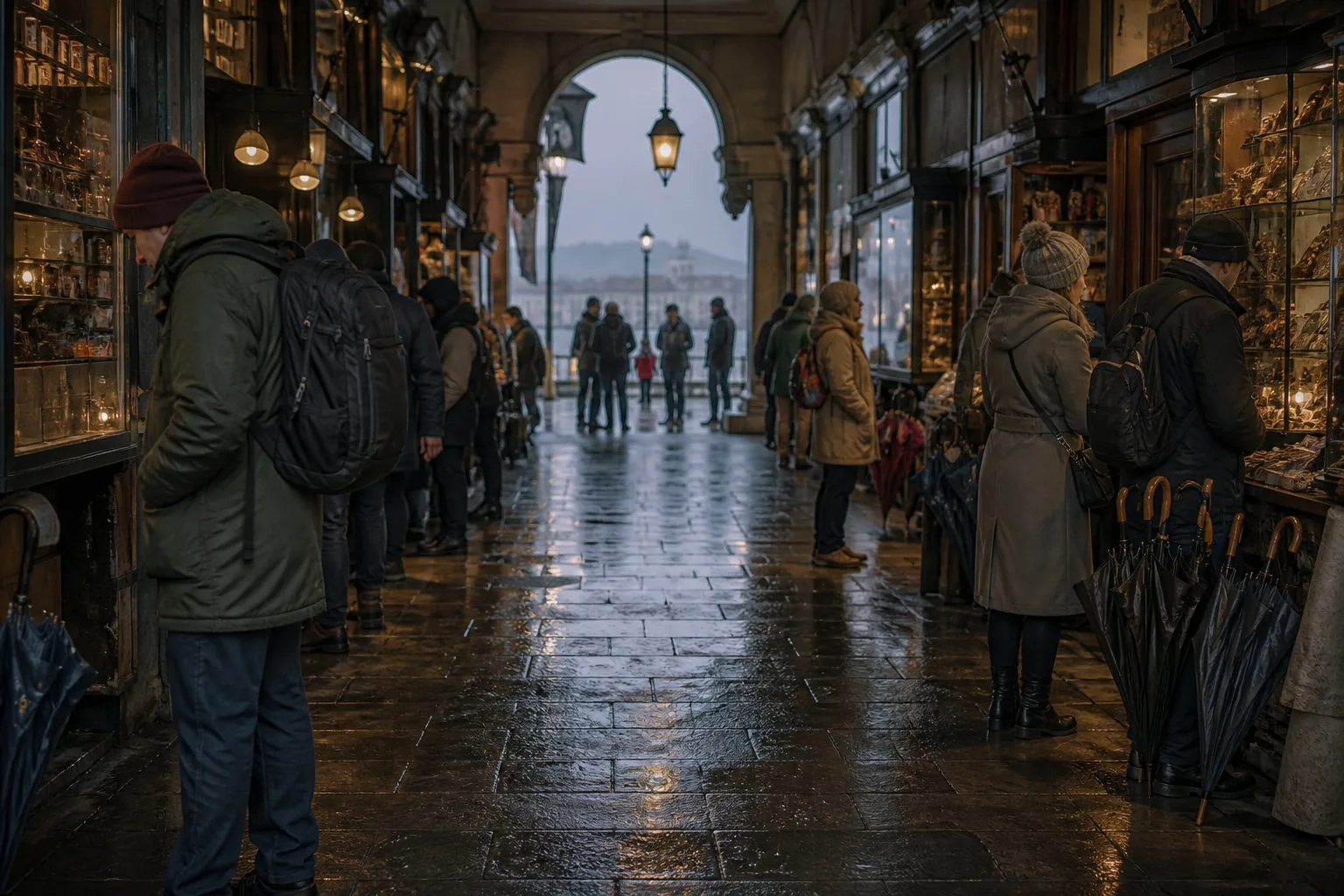
Wet days turn hallways into waiting rooms. Station foyers, market sheds, gallery entrances, and lodging arcades fill faster than maps suggest. Travellers who arrive without a second option often claim the first bench with bags and coats, then stay long enough to turn a reset into a blockade. The roof is not the problem. The unplanned pause is.
I map covered pauses the same way I map stops: before coats go on. Two names on the page beat one hopeful doorway later. If the first space is already tight, you walk to the second instead of adding bodies to the jam. Shared roofs work only when each group treats them as transit, not as a private lounge.
Name two roofs while hands are dry
Pick places that can take a short reset without closing the path. Prefer halls with a clear exit as well as an entrance. Avoid single-file niches that become traps when umbrellas open. Write both names next to the route so the group does not invent a third “bonus” courtyard in the rain. Distance matters: a backup that sits twenty minutes away is not a backup when the shower is already on you.
- Choose a primary roof within a short walk of your first indoor stop.
- Choose a backup roof on a different block, not the same doorway.
- Note which one has seating and which one is stand-only.
- Agree on a maximum pause length before you leave lodging.
A covered pause is a reset, not a claim. If bags fill the bench, the roof has already failed the people still outside.
Keep the pause short and the doorway clear
Fifteen quiet minutes is often enough to dry hands, reread the next hour, and let a hard shower pass. Longer stays need a reason beyond comfort. Shake water before the mat. Leave space for the door swing. Do not wring sleeves onto the threshold. Move through, then sort bags inside and to the side. A doorway is infrastructure for the whole building, not a drying rack for one party.
- Close umbrellas before you block the inward door.
- Stand parallel to the walkway, not across it.
- Keep voices low in foyers that double as waiting halls.
- If the space is already full, go to the second named roof.
Courtesy on a wet day is mostly geometry: leave room for legs, wheels, and people who arrive after you. If staff keep a clear lane to a desk or counter, do not plant bags in that lane.
When a roof is the wrong choice
Some places look covered on a map and fail in practice: locked night gates, private lobbies, or halls that forbid lingering. Check signs. Respect posted rules. If staff ask people to keep moving, keep moving. A rebuilt wet day that ignores local order is only half finished. A hotel canopy or museum vestibule may look inviting and still be the wrong place to unpack a lunch.
Markets and transit halls usually expect wet traffic. Even there, treat seating as shared. One person with a folded map is fine; four people with open packs on every seat is how a pause earns hard looks. This is manners and flow, not a promise that rain will feel pleasant. Questions about chill or fatigue belong with a qualified professional. Verify opening hours on the morning you leave: roofs that worked on a previous stay can close on the next one.